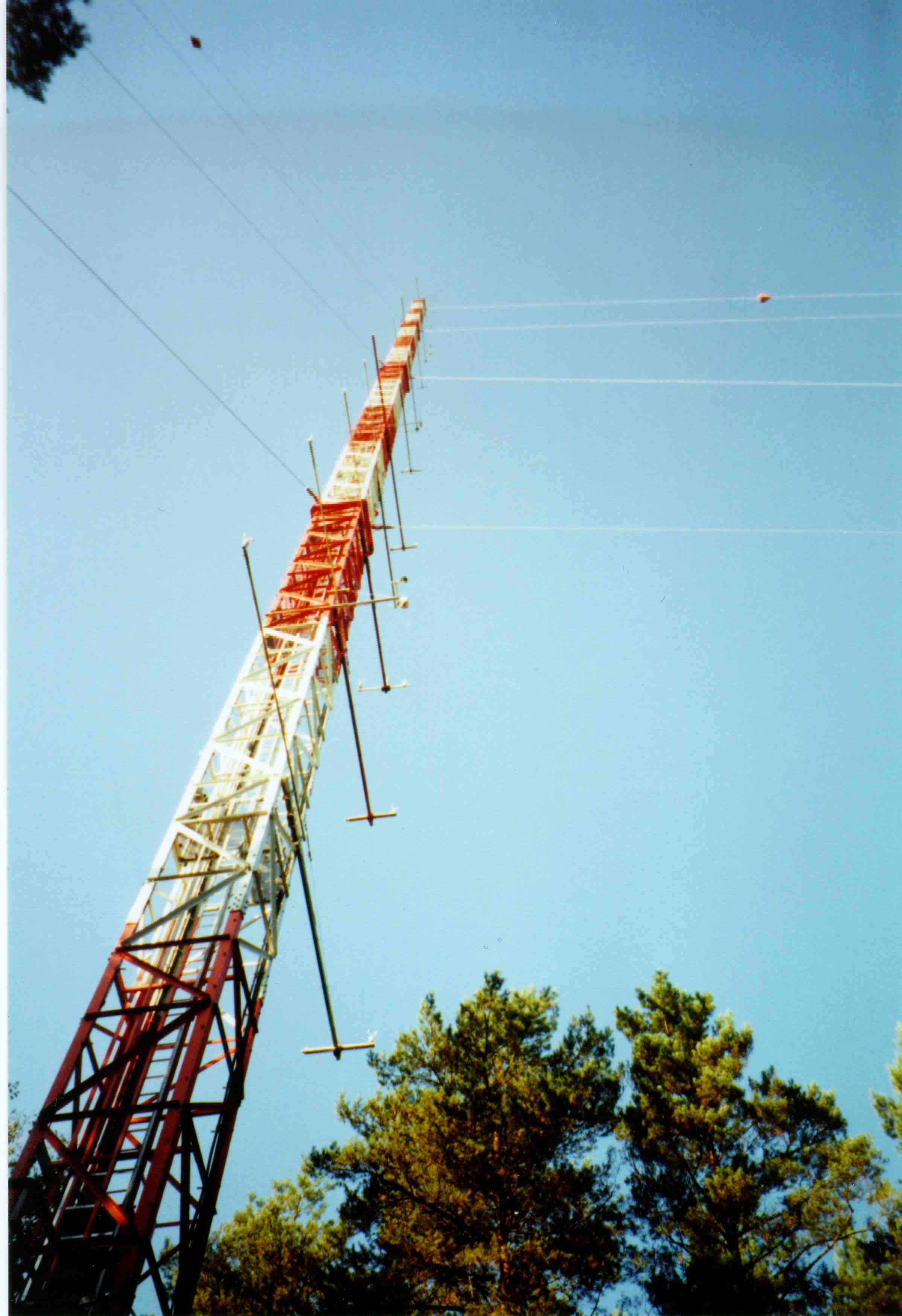
Field studies
Whilst in laboratory studies it is possible to investigate isolated reaction systems under clearly defined conditions, the real atmosphere is an extremely complex mixture in which homogeneous and heterogeneous reactions – often light-induced – take place. Such complex systems can only be investigated through field measurements. The aim is to apply insights from laboratory studies and modelling in the real atmosphere. However, new and unexpected phenomena are often observed there, which in turn lead to new laboratory and modelling studies.
In field measurements carried out in conurbations, the concentrations of trace substances harmful to health are of particular interest. Such field measurements then form the basis for emission reductions, for example from motor vehicle traffic (see, for example, ‘EURO standards’, ‘the debate on particulate matter’), which are then verified using emissions measurements .
Field measurements have been carried out in the Department of Physical Chemistry in Wuppertal for around 20 years.
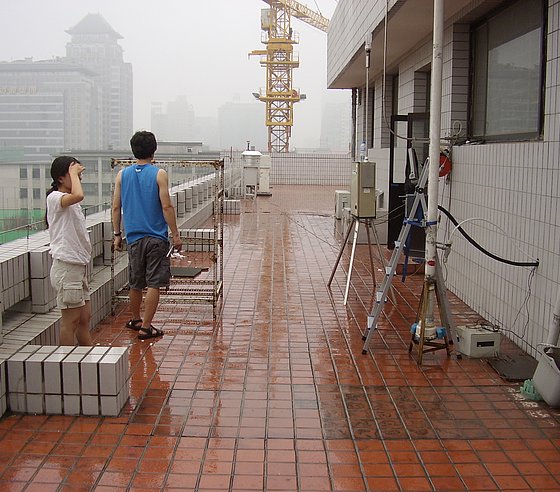
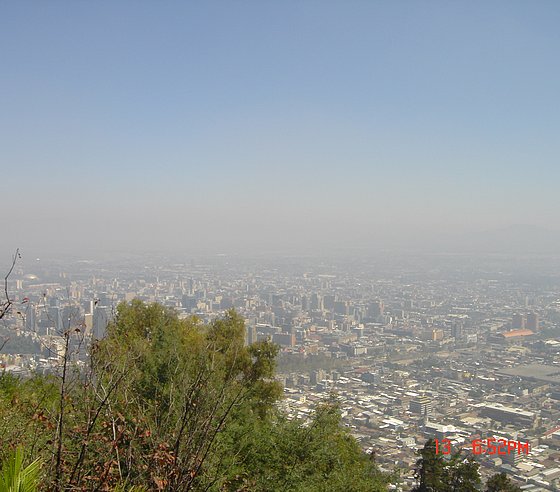
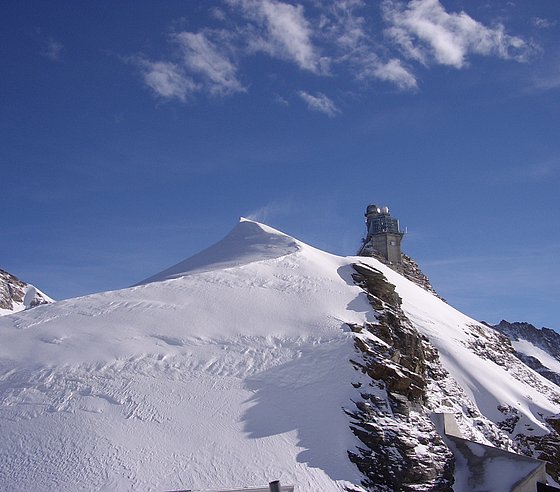
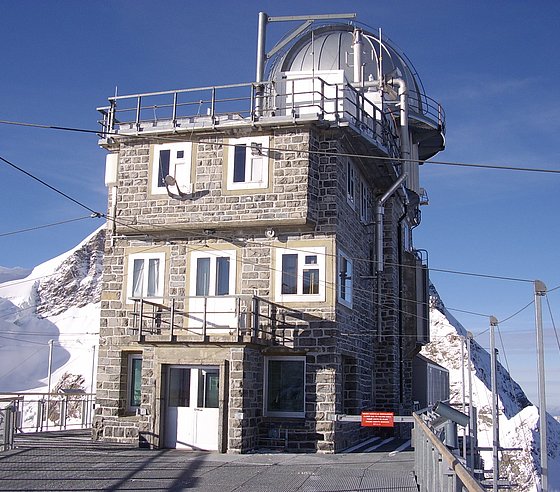
Examples listed here include measurement campaigns carried out in conurbations, e.g. in Santiago de Chile, but also in areas of clean air, e.g. on the Jungfraujoch or in Barrow, Alaska, to characterise the atmosphere’s purifying capacity.
Measurements in conurbations:
Measurements in clean air zones:
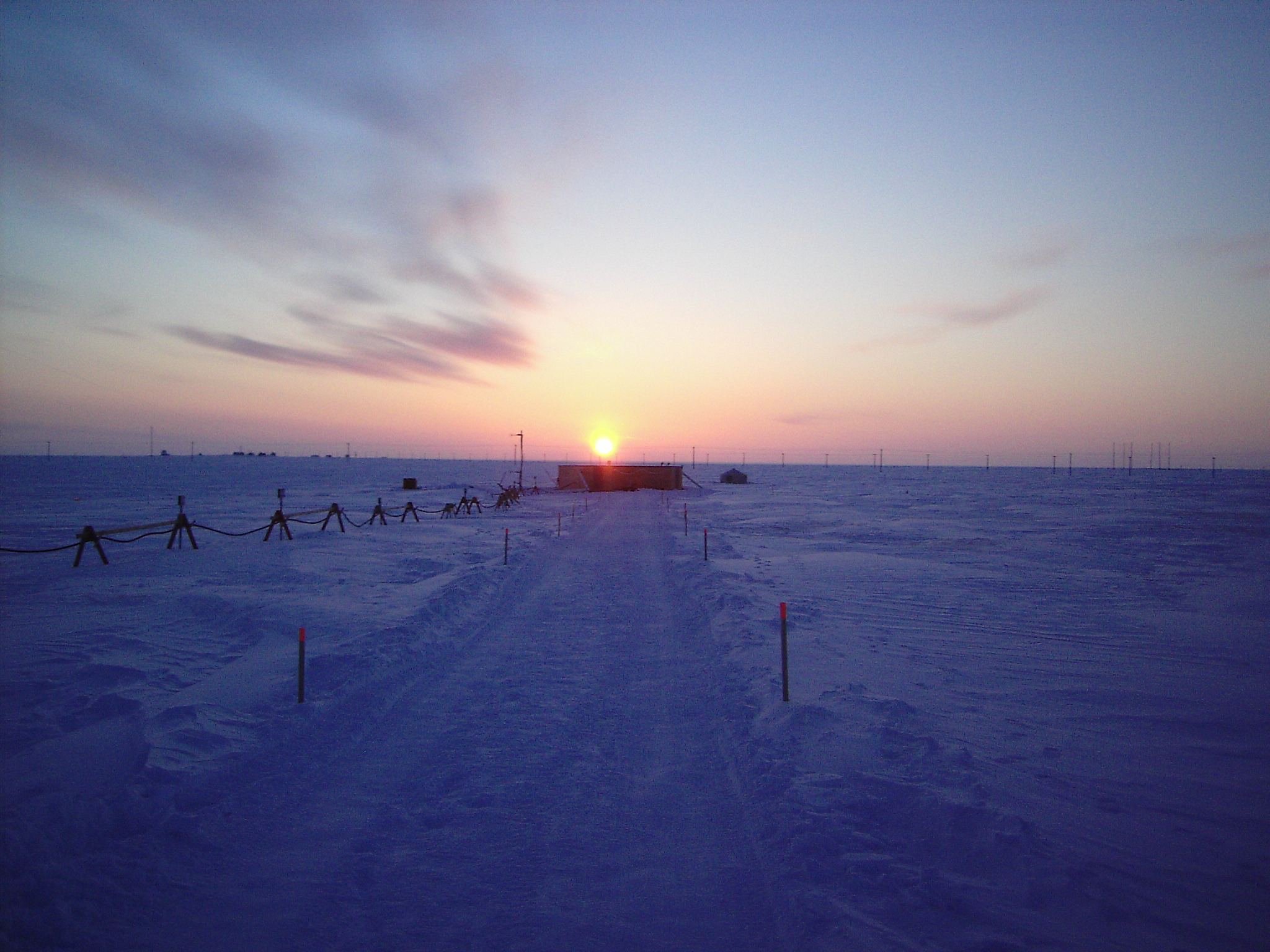
Barrow (Alaska)
Gradient measurements of trace gases in the atmosphere to verify formation mechanisms.